
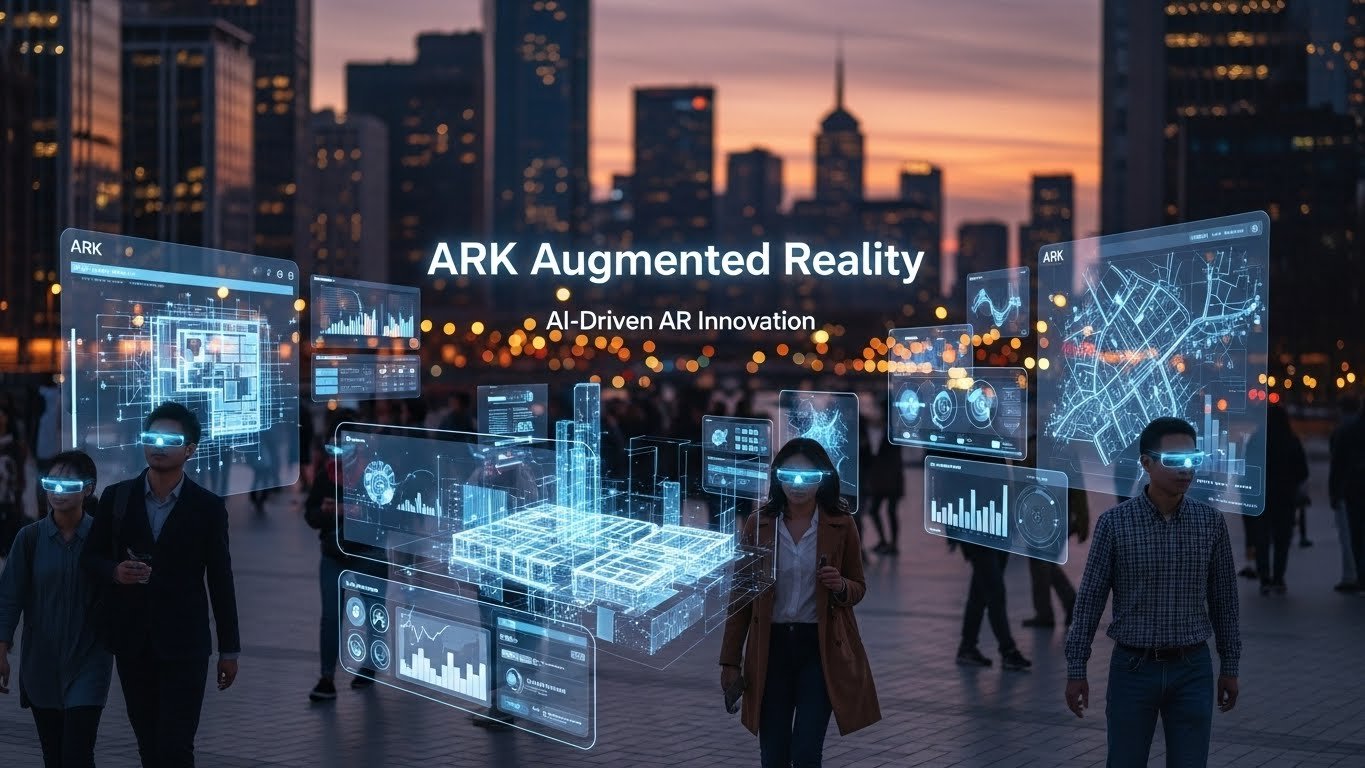
Imagine walking through a museum and seeing historical artifacts come to life, or trying on clothes virtually without stepping into a fitting room. This is the magic of augmented reality (AR). It blends digital elements with the real world, creating immersive experiences that captivate users across various sectors. With AR technology advancing at an incredible pace, we stand on the brink of revolutionary changes in how we interact with our surroundings. Enter ARK: a pioneering force in AI-driven augmented reality innovation that’s set to transform industries as we know them. Let’s dive deeper into this fascinating realm and discover what makes ARK Augmented Reality truly special.
What is Augmented Reality?
Augmented reality (AR) is a technology that enhances the real world with digital overlays. It integrates computer-generated images, sounds, and other sensory inputs into our everyday environments.
This blend creates an interactive experience where virtual elements coexist with physical spaces. Unlike virtual reality, which immerses users in entirely artificial settings, AR enriches what we already see.
From smartphone apps to advanced glasses, AR can be experienced through various devices. Users might point their phones at a landmark to learn more about it or use smart glasses for navigation while keeping their hands free.
The potential of augmented reality extends beyond entertainment; it holds promise in education, healthcare, and retail as well. By providing contextual information on demand, AR transforms how we perceive and engage with the world around us.
The Rise of AR Technology
Augmented Reality has come a long way since its inception. Once a concept limited to science fiction, it is now redefining how we interact with the world around us. The rapid advancements in smartphone technology have played a pivotal role in this rise.
High-resolution cameras and powerful processors make AR accessible to everyday users. As apps emerge that blend digital elements seamlessly into real-life environments, excitement grows among consumers and businesses alike.
Moreover, tech giants are investing heavily in AR research. This influx of funding fosters innovation, leading to more sophisticated applications across various sectors.
From gaming experiences like Pokémon GO to practical solutions in retail and education, AR is becoming an essential tool for engagement. Its potential seems limitless as industries explore new ways to enhance user experience through immersive interactions. Each breakthrough paves the way for even greater possibilities ahead.
How AR is Being Utilized in Different Industries
Augmented Reality is transforming various sectors in remarkable ways. In healthcare, surgeons are using AR for enhanced visualization during complex procedures. By overlaying vital information on a patient’s body, they can make more informed decisions.
The retail industry also benefits from AR technology. Brands offer virtual try-ons, allowing customers to see how clothes or accessories would look on them without stepping into a fitting room. This immersive experience drives engagement and boosts sales.
In education, AR creates interactive learning environments. Students can explore 3D models of historical artifacts or biological structures right from their classroom desks, making lessons more memorable and impactful.
Manufacturing has embraced AR as well. Technicians utilize smart glasses that display instructions directly onto machinery while performing maintenance tasks, increasing efficiency and reducing errors in the process.
From real estate to tourism, industries are finding innovative applications for augmented reality to enhance user experiences and streamline operations.
Introducing ARK: AI-Driven AR Innovation
ARK represents a groundbreaking leap in augmented reality, merging AI capabilities with immersive technology. It harnesses the power of machine learning to create personalized experiences that adapt in real-time.
With ARK, users can interact with their environment like never before. Imagine walking through a museum where digital guides pop up to provide context and historical anecdotes about each exhibit. This is just one example of how ARK redefines engagement.
The platform enables businesses to craft tailored solutions across various applications—from interactive marketing campaigns to enhanced training modules in corporate settings.
Developers are empowered by its intuitive interface, allowing them to build dynamic content without extensive coding knowledge. This democratizes access, making AR innovation available for everyone.
As industries continue exploring possibilities, ARK stands at the forefront of this evolution, setting new standards for what augmented reality can achieve today and tomorrow.
Advantages and Benefits of Using ARK
ARK Augmented Reality offers a multitude of advantages that can transform how businesses operate. Its AI-driven features enhance user interaction, creating immersive experiences tailored to individual preferences.
One significant benefit is its ability to streamline training processes. Companies can utilize ARK for realistic simulations, enabling employees to gain hands-on experience without real-world risks.
Additionally, ARK improves customer engagement by allowing users to visualize products in their environment before making purchases. This not only increases confidence but also boosts sales conversion rates.
Moreover, ARK’s analytics capabilities provide valuable insights into user behavior and preferences. Businesses can leverage this data to refine marketing strategies and improve service offerings continuously.
The integration of ARK into various platforms ensures seamless deployment across devices. This flexibility makes it accessible for companies of all sizes looking to innovate their approach with augmented reality solutions.
Potential Future Developments of ARK
The future of ARK Augmented Reality holds immense promise. With continuous advancements in artificial intelligence, we can expect more sophisticated and immersive experiences. Imagine personalized virtual environments that adapt to individual user preferences.
Developers are likely to focus on enhanced interactivity. This could lead to real-time collaboration within augmented spaces, transforming how teams work together across distances.
Moreover, integration with other technologies like IoT (Internet of Things) will elevate the potential of ARK even further. Smart devices might sync seamlessly with AR applications for a unified experience.
As consumer needs evolve, so too will the applications of ARK in everyday life—from education and training tools to innovative marketing strategies that engage users beyond traditional methods.
These developments indicate a shift toward broader accessibility, making cutting-edge technology available to everyone—not just tech enthusiasts or industries heavily invested in augmented reality solutions.
Conclusion
As the world continues to embrace innovative technologies, ARK Augmented Reality stands at the forefront of change. This integration of artificial intelligence and augmented reality is transforming how we interact with our environment. From enhancing user experiences in retail to providing immersive educational tools, ARK showcases the limitless possibilities ahead.
Businesses across various sectors are beginning to realize that adopting such advanced technology can lead to increased engagement and improved efficiency. As more industries leverage this powerful tool, it will likely pave the way for new applications we have yet to imagine.
Looking down the road, advancements in ARK could revolutionize how we perceive and interact with digital content. With continued investment and research into AI-driven solutions, there’s a bright horizon filled with opportunities waiting just around the corner. Embracing this shift may unlock potential that fundamentally alters our daily lives for better or worse.
The future of AR has arrived—and it’s powered by innovations like ARK that promise not only improvement but also inspiration for what lies ahead in both personal and professional realms.
